
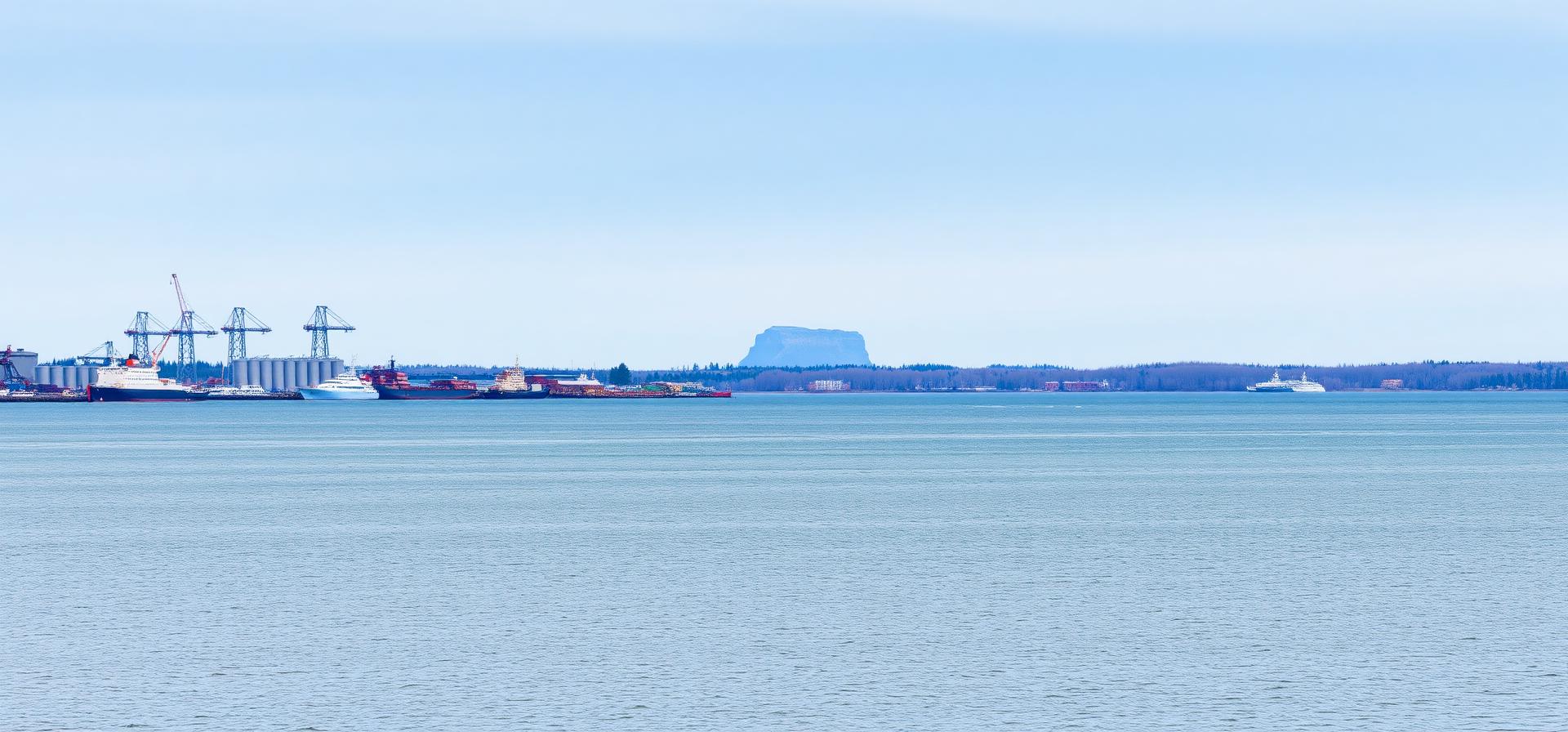
Thunder Bay sits at the western tip of Lake Superior — the westernmost deep-water port on the Great Lakes–St. Lawrence Seaway system. For grain carriers, bulk vessels, salties, and Canadian lakers, it's a critical provisioning stop. Getting the order right matters, because the next supply opportunity might be days away.
What ship provisioning actually involves
Ship provisioning is the process of supplying a vessel with everything the crew needs for the duration of a voyage — food, beverages, cleaning supplies, and galley consumables. At Thunder Bay, provisioning typically happens during cargo loading or discharge, when the vessel is berthed for 24 to 72 hours. That window is tight, and coordinating provisions around it requires a supplier who understands local berth assignments, gate access, and timing.
A local ship chandler in Thunder Bay handles the end-to-end process: receiving the order from the ship's agent, sourcing and packing, cold-chain storage, and dockside delivery directly to the vessel's gangway.
Types of provisions available
A complete provisioning order at Thunder Bay typically covers several categories. Understanding what's available helps agents build more accurate requisitions and avoid last-minute scrambling.
- Fresh provisions — fruits, vegetables, herbs, and salad greens, selected for quality and delivered as close to departure as possible.
- Frozen goods — meats, poultry, seafood, frozen vegetables, and ready meals that extend the galley's capability across the voyage.
- Dry stores — rice, pasta, flour, sugar, canned goods, sauces, oils, and pantry staples with long shelf life.
- Dairy & bakery — milk, butter, cheese, eggs, bread, and pastries maintained at correct temperatures.
- Specialty & ethnic provisions — authentic Indian, Sri Lankan, and African groceries for diverse crews, including spices, dals, atta, fufu, palm oil, and ready-to-cook items.
- Beverages — water, soft drinks, juices, tea, coffee, and regional drinks.
For a full breakdown of what's available, see our Provisions & Catering page.
Planning around port call schedules
Timing is the single biggest variable in ship provisioning. Thunder Bay port calls can range from under 24 hours for a fast grain load to several days for a complex discharge. Here's what works:
- 48 hours before ETA is ideal for a full provisioning order. This gives the chandler time to source, pack, and arrange cold-chain storage.
- 24 hours is workable for most standard items — fresh produce, frozen goods, dry stores, and beverages.
- 72 hours is recommended for less common specialty items — specific regional spice blends, ethnic staples, or large-volume orders.
Agents placing orders by WhatsApp or email can expect confirmation and pricing within a few hours. The faster the order comes in, the more flexibility the chandler has on sourcing and pricing.
Cold-chain handling and food safety
Any reputable ship chandler handles provisions across a strict cold-chain — refrigerated storage from receiving through packing, and temperature-controlled transport to the vessel. At Thunder Bay, this matters especially in summer when ambient temperatures climb, and in winter when transit timing between cold room and pier must account for extreme cold affecting packaging.
Fresh produce, dairy, and frozen goods should arrive at the gangway in the same condition they left the cold room. A local chandler based at the port can guarantee shorter transit times between cold storage and dockside delivery — a real advantage over remote suppliers dispatching from hours away.
Why a local chandler outperforms remote suppliers
Ship provisioning at Thunder Bay is a logistics exercise as much as a sourcing one. A chandler based at the port offers several concrete advantages:
- Knowledge of berth assignments — knowing which berth a vessel is assigned to, and how to coordinate delivery with terminal operations.
- Responsiveness to schedule changes — port calls shift. A local supplier can adapt to a changed ETA within hours, not days.
- Shorter cold-chain transit — less time between cold room and gangway means better quality on arrival.
- Established local sourcing — relationships with regional producers, wholesalers, and specialty importers that a remote supplier doesn't have.
Don't forget the ship's office
Provisioning isn't just about the galley. Vessels also need stationery and office supplies — printer paper, log books, pens, folders, toner cartridges, and general office consumables. At Thunder Bay, these can be included in the same order as your food provisions, delivered in a single dockside drop. One invoice, one supplier, one point of contact.
Tips for agents placing a first-time order
- Send your ETA early — even if approximate, it lets the chandler begin sourcing.
- Include crew count and composition — how many crew, any dietary requirements, and cuisine preferences.
- Specify voyage length — this determines quantities and the balance between fresh and frozen.
- Combine provisions and office supplies — one order, one delivery, less coordination.
- Use WhatsApp — it's the fastest channel for back-and-forth on specific items, brands, or quantities.
Ready to provision your vessel at Thunder Bay?
Send us your vessel name, ETA, crew count, and requirements. We'll return a costed provisioning list within one business day.
Get a Quote